The Project
Industry
Energy & Environment – Renewable Energy Storage
CAPABILITIES APPLIED
A renewable energy company needed to develop and validate a high-temperature thermal energy storage system designed to store megawatt-hours of thermal energy at temperatures approaching 2000°C. The lack of reliable material data above 1500°C created significant unknowns around thermal block behavior, insulation performance, and material degradation. The project demanded seamless integration across thermal, electrical, structural, and fluid systems while balancing cost, manufacturability, and performance. Material lead times for specialized high-temperature components threatened aggressive timelines, and the company needed to validate its technology at pilot scale before committing to commercial manufacturing investments.
We delivered a fully engineered pilot-scale thermal energy storage system through a structured, multi-phase approach that advanced the technology from laboratory concepts to a pilot-scale system that de-risked the path to commercial deployment.
Re:Build retrofitted a crystal-growth furnace into the Alpha thermal testing platform, enabling over 200 hours of continuous operation at extreme temperatures. By evaluating thermal block behavior, insulation effectiveness, thermal interfaces, oxidation risks, and degradation patterns under actual operating conditions rather than theoretical predictions, this real-world validation reduced uncertainty around material selection and enabled confident scale-up decisions.
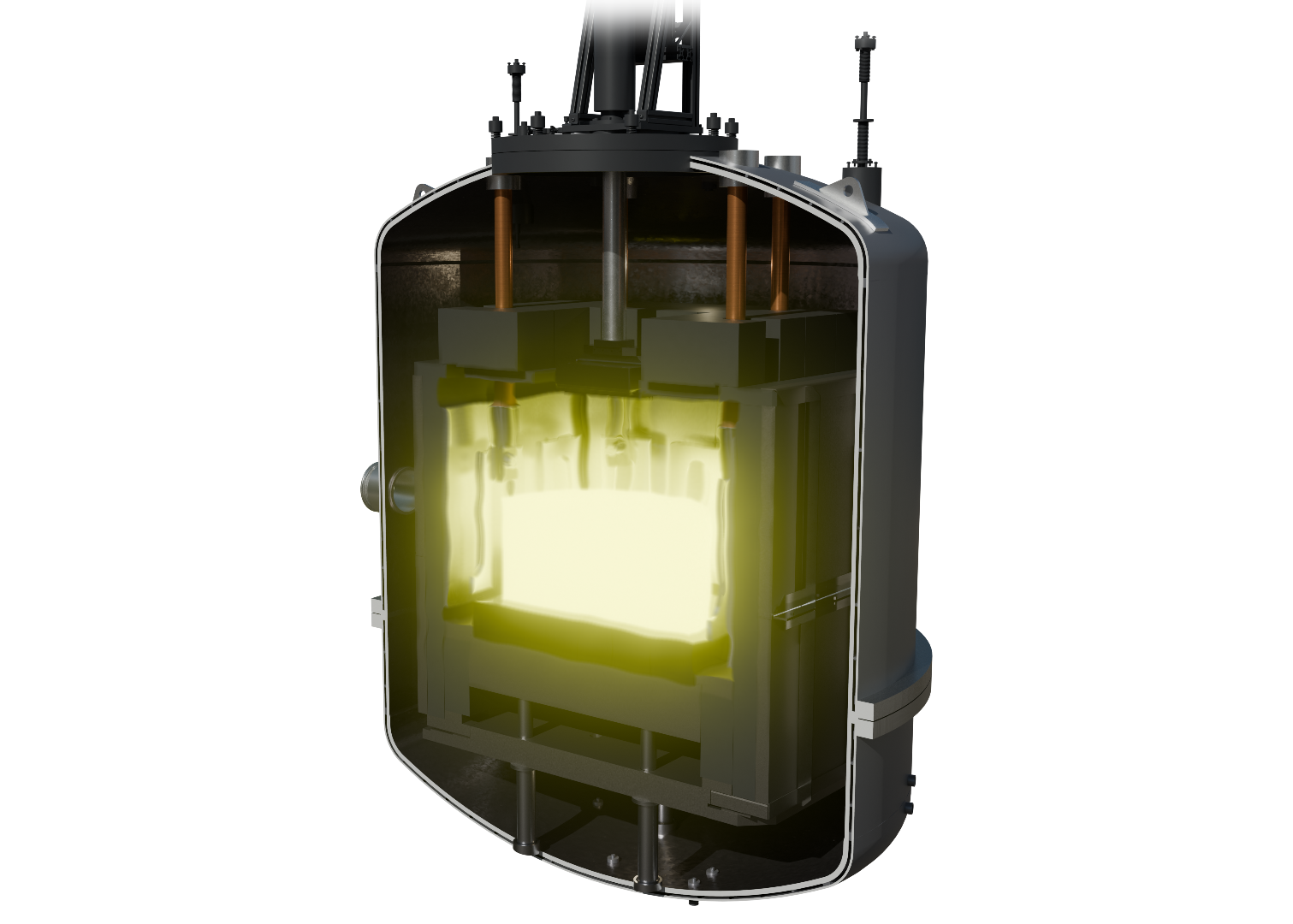
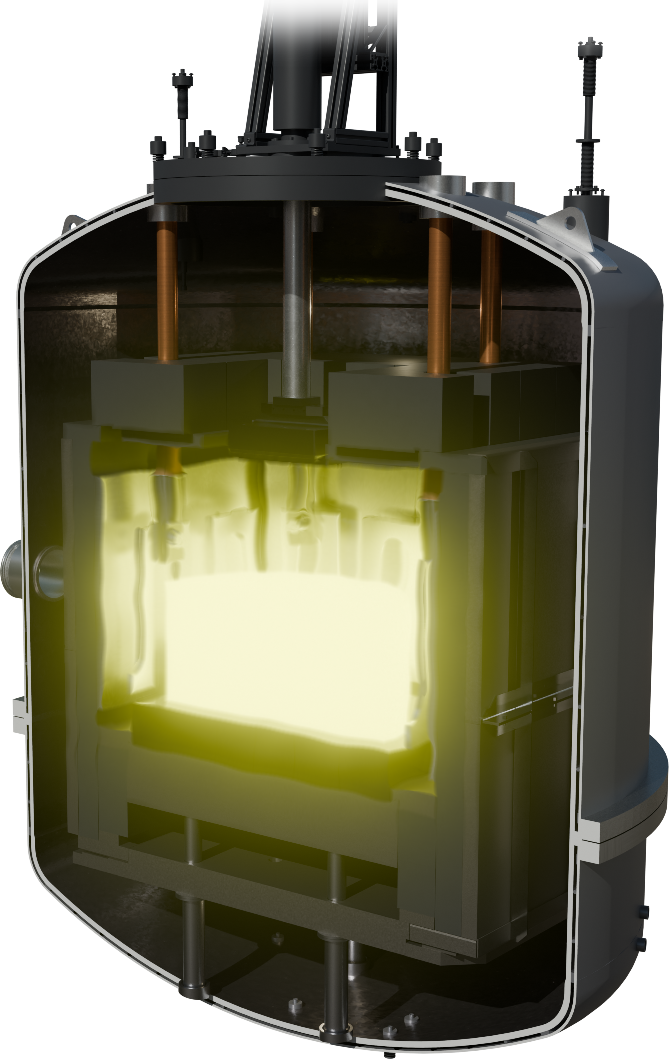
Instead of jumping to full scale, the team designed the Beta prototype system featuring a 6.5-metric-ton thermal block array. Operating at internal temperatures up to 2000°C with high-current rod heaters delivering over 1000 amps, this stage served as a critical de-risking step before full-scale commercialization, validating heating element geometry, insulation layout, gas flow management, and practical assembly processes while reducing development risk.
To accelerate design iteration and reduce the need for costly physical prototypes, Re:Build developed an extensive modeling toolkit integrating SolidWorks Flow Simulation for convective cooling and radiation, ANSYS FEA for thermal stress and seismic analysis, Matlab for charge/discharge cycles and surface radiation, and custom calculators for performance prediction. Surface-to-surface radiation modeling optimized discharge component positioning, eliminating the need to physically move equipment during operation.
The team engineered a hybrid insulation system combining rigid panels and soft felt materials to achieve required thermal performance while managing specialty material lead times. This approach reduced reliance on single-source components with extended procurement cycles while maintaining system efficiency.
Re:Build designed high-current heating elements and electrical systems capable of reliably delivering over 1000 amps for efficient energy conversion. The design addressed thermal expansion, electrical isolation, and safety requirements while ensuring uniform heat distribution across the thermal block array.
The mechanical and structural design balanced extreme thermal stresses, repeated thermal cycling, and seismic event requirements. The frame and internal structures were engineered for practical assembly, transportation, and installation while maintaining performance throughout all operational conditions.
Re:Build provided complete system integration and on-site support, including installation assistance and commissioning at the test facility. This hands-on approach ensured smooth transition from fabrication to operational validation and identified practical considerations for future deployments.
Energy Storage
A roadmap for breakthrough
energy technologies
A roadmap for breakthrough
energy technologies
Alpha Testing System
Beta Unit – 6.5-Metric-Ton Thermal Block
Integrated Modeling Stack
Rigid + Soft Insulation Stack
1000+ Amp Heating Elements
Seismic-Rated Frame Structure
Full integration, installation, and commissioning support ensured successful operational handoff.
Pilot-scale thermal energy storage system completed, delivered, and installed at the test site, enabling operational validation and demonstrating the ability to store and release megawatt-hours of thermal energy at temperatures approaching 2000°C.
Structured progression from Alpha material testing through Beta prototype validation significantly reduced technical risk for commercial deployment, resolving key uncertainties through physical testing rather than assumptions.
Extensive validation data and lessons learned directly inform next-generation systems, including proven material selections, optimized insulation strategies, heating element configurations, and radiation modeling approaches.
Modular prototype approach validated assembly, transportation, and installation processes at meaningful scale, establishing a repeatable framework for future system development and cost-effective commercial production.
Comprehensive multiphysics modeling toolkit developed during the program serves as reusable asset for future thermal energy storage projects, accelerating design iteration and improving prediction accuracy.
Validated design approaches, material selections, and system architecture provide proven technology foundation for commercial-scale deployment, significantly reducing time and risk for market entry.